Why 90% of Travel Companies Struggle to Monetize In-Destination Experiences
The travel industry is experiencing a profound transformation in 2026. While global travel bookings reached $1.67 trillion and continue their upward trajectory, a striking paradox exists: over 90% of travel professionals want to sell in-destination experiences but struggle to do it profitably. This represents one of the most significant untapped revenue opportunities in modern tourism—and the companies that crack this code are positioning themselves for exponential growth.
The experiences sector is growing at 10% annually—2.5 times faster than the broader travel industry's 4% growth rate. Yet despite this surging demand, tour operators, destination management companies (DMCs), and travel agencies face mounting challenges that prevent them from capitalizing on this $138 billion market opportunity.
Table of Contents
- The Three Core Challenges Blocking Revenue Growth
- The Rising Cost of Customer Acquisition
- Why Traditional Approaches No Longer Work
- The Market Opportunity: A $372 Billion Future
- How Modern Travel Technology Platforms Solve These Challenges
- The All-in-One Platform Approach
- Data and AI: The Competitive Advantage
- Automation: The Path to 95%+ Operational Efficiency
- Real-World Impact: What Success Looks Like
The Three Core Challenges Blocking Revenue Growth
1. Lack of Know-How Beyond Core Products
Travel companies excel at selling their primary offerings—whether that's accommodations, flights, or package tours. However, when it comes to in-destination experiences like tours, activities, and attractions, most lack the expertise to market and sell effectively.
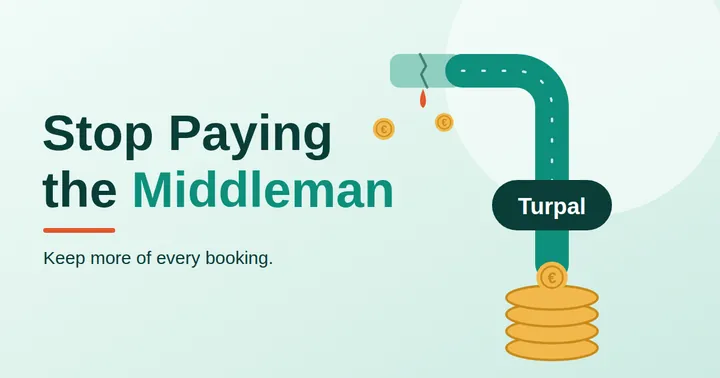
The result? High customer acquisition costs (CAC) and expensive support operations that erode profitability. According to recent industry research, travel companies saw CAC increase by 35% from 2022 to 2025, while customer lifetime value grew by only 4.5%—creating an unsustainable economic model.
2. Limited Understanding of In-Destination Products
At each destination, hundreds or thousands of experiences are available for travelers. Tour operators and DMCs struggle to:
- Curate the right experiences for their customer segments
- Understand local market dynamics and traveler expectations
- Maintain up-to-date knowledge of availability and pricing
- Manage the sheer volume of product options
This complexity often leads to decision paralysis, where companies either avoid offering experiences altogether or provide a limited selection that fails to meet diverse traveler needs.
3. Absence of Technological Infrastructure
Without the right technology stack, delivering seamless in-destination experiences becomes nearly impossible. Many travel companies still operate with:
- Outdated legacy systems that don't integrate with modern APIs
- Manual booking processes that consume valuable staff time
- Disconnected data sources that prevent personalization
- Limited automation that restricts scalability
A 2026 survey revealed that 77% of travel companies unknowingly target their own loyalty members through paid advertising due to fragmented data systems—wasting an estimated 27% of digital acquisition budgets.
The Rising Cost of Customer Acquisition
The economics of travel distribution have fundamentally shifted. While online travel agencies (OTAs) and super-apps offer seamless AI-driven experiences with instant pricing comparisons, traditional travel agencies and tour operators struggle to compete with slower processes and outdated digital experiences.
📊 35% from 2022 to 2025 - Customer Acquisition Cost Increase
This CAC crisis is particularly acute for in-destination services, where:
- Conversion rates remain persistently low
- Most first-time customers never return for a second purchase
- Up to 50% of revenue goes to sales and marketing
- Customer lifetime value barely increases despite rising acquisition costs
The companies that thrive in this environment aren't spending more on acquisition—they're leveraging technology to increase customer lifetime value through strategic cross-selling and upselling of in-destination experiences.
Why Traditional Approaches No Longer Work
The DIY Trap
Many tour operators attempt to build their own technology solutions or cobble together multiple point solutions. This approach typically results in:
- Extended development timelines (18-24 months or longer)
- High upfront costs without guaranteed ROI
- Limited functionality compared to specialized platforms
- Ongoing maintenance burdens that drain resources
The Manual Process Problem
DMCs relying on manual pre-booking workflows face significant operational bottlenecks. Industry research shows that FIT (Free Independent Traveler) revenue growth is often constrained not by demand or sales capability, but by:
- Finite systems that can't scale
- Finite teams overwhelmed by quote requests
- Complex workflows with 50+ micro-steps per booking
- Rate and availability issues discovered late in the process
> "FIT travel is expected to outpace organized group growth through 2026, driven by traveler preference for personalization and flexibility"
> — Phocuswright Research
When consultants only discover availability or pricing issues after manually assembling an itinerary, the opportunity cost is high—files must be reworked under pressure, responses are delayed, and confidence erodes on both sides.
The Market Opportunity: A $372 Billion Future
Despite these challenges, the opportunity has never been greater. The global experience travel services market was valued at $138 billion in 2024 and is projected to reach $372.93 billion by 2034, growing at a CAGR of 10.5%.
Key Market Drivers
| Factor | Impact | Growth Rate |
|---|---|---|
| Experiences Sector | Growing 2.5x faster than overall travel | 10% annually |
| Adventure Tourism | Millennials & Gen Z prioritizing experiences | 15.8% CAGR |
| Digital Bookings | Online channels surpassing $1 trillion | Outpacing offline |
| Personalization Demand | Travelers seeking tailored itineraries | 26% prefer slow travel |
Traveler Behavior Shifts in 2026
Modern travelers are fundamentally different from pre-pandemic customers:
- 40% of global consumers now use AI for travel planning
- 78% say AI improves their trip planning experience
- 75% travel for leisure, but business travel is rebounding strongly (+3%)
- Culture and history top the list of planned activities, followed by gastronomy and nature
- Wellness experiences are growing (+3%), particularly among Chinese travelers (25%)
📊 $1.67 trillion in 2025 - Global Travel Bookings
How Modern Travel Technology Platforms Solve These Challenges
The most successful travel companies in 2026 aren't trying to build everything themselves—they're partnering with specialized travel technology platforms that provide comprehensive, integrated solutions.
The All-in-One Platform Approach
Modern B2B travel platforms function like "Shopify for experiences," offering:
For Travel Professionals:
SEO-Optimized Web Builder
- Mobile-friendly, conversion-optimized design
- Direct booking capabilities that maximize profit margins
- Integrated payment processing
- Multi-language and multi-currency support
Product & Availability Management Console
- Centralized inventory management for thousands of experiences
- Real-time availability updates
- Automated pricing rules
- Bulk operations for efficiency
Global Marketplace Access
- Real-time access to thousands of vetted suppliers
- Hundreds of thousands of experiences worldwide
- Instant booking confirmations
- Competitive pricing transparency
Itinerary Builder
- Visual trip planning interface
- Drag-and-drop functionality
- Automated confirmation management
- Client-facing itinerary sharing
Operations Management
- Automated booking confirmations
- Supplier coordination tools
- Payment reconciliation
- Performance analytics
Marketing Automation
- Multi-channel engagement (WhatsApp, email, SMS)
- Triggered campaigns based on traveler behavior
- Abandoned cart recovery
- Post-trip follow-up sequences
Managed Marketing Services
- Google Ads campaign management
- Google Things to Do integration
- Content marketing support
- SEO optimization
For Travelers:
Mobile-First Experience
- Intuitive booking interface
- Real-time itinerary access
- Direct communication with operators
- Secure payment processing
Smart Recommendations
- AI-powered personalization
- Context-aware suggestions
- Social proof integration
- Dynamic pricing displays
AI Travel Assistant
- 24/7 conversational support
- Natural language query handling
- Instant booking modifications
- Local information and tips
Data and AI: The Competitive Advantage
The most transformative aspect of modern travel technology platforms isn't just automation—it's intelligence. AI and machine learning are revolutionizing how travel companies interact with customers and optimize operations.
Personalization at Scale
Advanced platforms use AI to:
- Analyze booking patterns and predict traveler preferences
- Generate tailored recommendations based on demographic data, past behavior, and real-time context
- Optimize pricing dynamically based on demand, competition, and customer willingness to pay
- Identify cross-sell opportunities at the perfect moment in the customer journey
> "AI has the potential to revolutionize customer service in the travel industry, making interactions more efficient and personalized"
> — Glenn Fogel, CEO of Booking Holdings
The Right Experience, Right Person, Right Time
Traditional travel companies offer generic recommendations that feel impersonal. AI-powered platforms deliver:
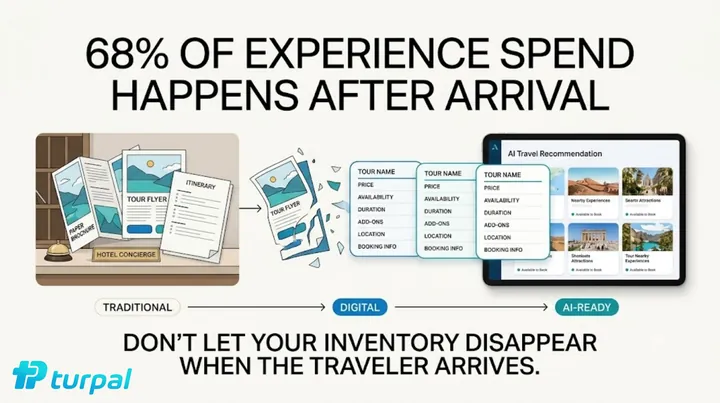
| Traditional Approach | AI-Powered Approach |
|---|---|
| One-size-fits-all recommendations | Hyper-personalized suggestions based on 50+ data points |
| Manual curation by staff | Automated matching using machine learning |
| Static pricing | Dynamic pricing optimized for conversion |
| Reactive customer service | Proactive issue resolution before problems impact trips |
Operational Intelligence
Behind the scenes, AI drives efficiency through:
- Email parsing and auto-booking creation (reducing input time from minutes to seconds)
- Predictive disruption management that anticipates issues before they occur
- Automated itinerary generation that cuts response times by 60%+
- Intelligent inventory allocation that maximizes revenue per available experience
Automation: The Path to 95%+ Operational Efficiency
The most successful travel technology platforms automate over 95% of operations, freeing teams to focus on high-value activities like relationship building and strategic growth.
Key Automation Capabilities
Booking Workflow Automation
- Instant confirmation processing
- Automated supplier notifications
- Payment reconciliation
- Invoice generation
Customer Communication Automation
- Pre-trip preparation sequences
- Real-time booking updates
- Post-trip feedback collection
- Review request campaigns
Operational Task Automation
- Availability checking
- Rate updates
- Calendar synchronization
- Reporting and analytics
Marketing Automation
- Abandoned cart recovery
- Cross-sell recommendations
- Seasonal promotions
- Loyalty program management
📊 95%+ of operations automated - Operational Automation
Real-World Impact: What Success Looks Like
When travel companies implement comprehensive technology solutions, the results are transformative:
Revenue Growth
- 30-50% increase in ancillary revenue from in-destination experiences
- Higher average transaction values through strategic upselling
- Improved profit margins on direct bookings (10-16% on hotels, 30-50% on insurance)
Operational Efficiency
- 60% reduction in quote response times
- 75% decrease in manual data entry
- 90% fewer availability-related booking errors
- 50% reduction in customer support workload
Customer Experience
- Higher satisfaction scores from seamless booking experiences
- Increased repeat bookings through personalized recommendations
- Better reviews due to proactive issue resolution
- Stronger loyalty from consistent, high-quality experiences
Competitive Positioning
- Faster time-to-market for new destinations and experiences
- Greater product diversity without operational complexity
- Enhanced brand reputation as a technology-forward company
- Scalability to handle growth without proportional cost increases
Questions Fréquentes (FAQ)
What is a travel technology platform?
A travel technology platform is a comprehensive software solution designed to help tour operators, DMCs, and travel agencies manage their entire business operations—from inventory and bookings to marketing and customer service. Modern platforms integrate web builders, marketplace access, automation tools, and AI-powered features to streamline operations and drive revenue growth.
How can travel companies reduce customer acquisition costs?
Travel companies can reduce CAC by: (1) implementing integrated data systems to avoid targeting existing customers through paid ads, (2) leveraging AI-powered personalization to improve conversion rates, (3) focusing on customer retention and lifetime value through strategic cross-selling of in-destination experiences, and (4) using marketing automation to nurture leads more efficiently.
What's the difference between B2B and B2C travel platforms?
B2B travel platforms are designed for businesses that sell to other businesses (travel agencies, tour operators, DMCs), offering features like bulk booking management, negotiated pricing, sub-agent portals, and wholesale distribution. B2C platforms sell directly to consumers. Modern platforms often support both models (B2B2C), allowing businesses to serve both channels from a single system.
How does AI improve in-destination experience sales?
AI improves experience sales by analyzing traveler data to deliver personalized recommendations at the optimal moment, automating itinerary creation to reduce response times, predicting customer preferences based on behavior patterns, optimizing pricing dynamically for maximum conversion, and providing 24/7 conversational support through AI assistants.
What ROI can travel companies expect from technology investments?
While ROI varies by company size and implementation, typical results include 30-50% increases in ancillary revenue, 60% reductions in operational costs through automation, 35-40% improvements in conversion rates through personalization, and 20-30% increases in customer lifetime value through better retention and cross-selling.
Chiffres Clés
📊 90%+ of travel professionals want to sell in-destination services but struggle to do it profitably (Industry Research)
💰 $372.93 billion projected market size for experience travel services by 2034 (Polaris Market Research)
📈 10% annual growth rate for experiences sector—2.5x faster than overall travel industry (Arival Report 2026)
💸 35% increase in customer acquisition costs from 2022 to 2025 (Adobe, Publicis Sapient & Incisiv)
🤖 40% of global consumers now use AI for travel planning (Statista 2025)
⚙️ 95%+ operational automation achievable with modern travel technology platforms
Conclusion
The travel industry stands at a critical inflection point. While demand for in-destination experiences surges at 10% annually, most travel companies lack the technology infrastructure to capitalize on this $372 billion opportunity. The gap between customer acquisition costs and lifetime value continues to widen, creating an unsustainable business model for companies relying on traditional approaches.
The solution isn't to spend more on acquisition—it's to leverage modern travel technology platforms that combine comprehensive functionality, AI-powered intelligence, and extensive automation. These platforms enable travel companies to:
- Access thousands of experiences through integrated marketplaces
- Automate 95%+ of operations to scale without proportional cost increases
- Deliver personalized recommendations that increase conversion and lifetime value
- Reduce customer acquisition costs through better data integration and targeting
- Compete effectively with OTAs and super-apps through superior technology
For tour operators, DMCs, travel agencies, and vacation rental companies generating between $0.5M and $200M in GMV, the choice is clear: embrace comprehensive technology solutions or risk falling further behind competitors who are already reaping the benefits of digital transformation.
The companies that thrive in 2026 and beyond won't be those with the largest marketing budgets—they'll be those that leverage technology to deliver exceptional experiences efficiently, profitably, and at scale. The question isn't whether to invest in travel technology—it's how quickly you can implement it to capture your share of this rapidly growing market.